
 Does the heat in your house escape through the walls as well as through the roof? If so, I can imagine that you would want to start renovating and insulating. A good decision, definitely, because your living comfort will increase and you can expect a considerably lower energy bill. And that’s where things go wrong! Why? Because initially you get to see calculations based on technical measures. These figures promise interesting savings. Except that they do not account for your behavior in your house, while it is largely the way you live that determines your energy consumption. So make sure you tell your supplier how you live and that you intend to stay involved in the renovation process. Surveys clearly show that your involvement is badly needed to ensure optimal results.
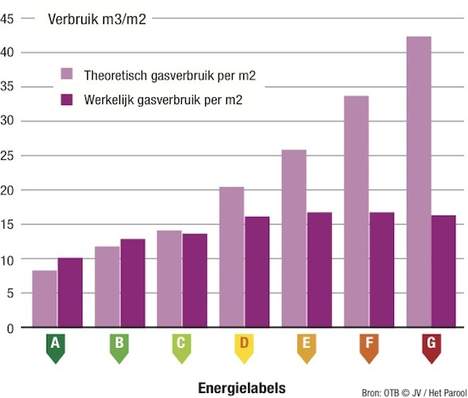 Maybe you have seen them already: calculations on how roof and wall insulation, double and triple glazing, a highly efficient boiler or even no boiler but a heat exchanger, will lower your energy bill significantly. It sounds only logical. Except that human behavior mostly is not. For what do we do? In a poorly insulated house, we put on an extra sweater and turn down the thermostat. Once our home is well insulated, we throw the sweater aside, turn up the heater and make it warm and cosy. In other words, we are consuming more energy. Dirk Brounen, professor of real estate economics at Tilburg University, examined this so-called rebound effect for the Dutch housing market.
Performance holes
My library contains interesting article about the same subject , in which the author links the results of various investigations into renovation projects. These studies, too, confirm that a large gap exists between the technical calculations and the actual energy consumption when houses are actually inhabited by real people. The calculations overestimate both the energy consumption in the old situation and the energy savings in the new one. Figure out your profit! Or rather, where is this profit then…? Maybe measures other than renovation are better? This insight has important implications for various aspects of renovating existing buildings. Both in the practical approach and in the process of developing policies.
BRIQS has explicit ideas about that:
1. Renovation projects are financially far more attractive if we tackle them systematically, with an industrial customized approach for each property type or housing block. Then we can actually learn from which changes you will benefit the most. Measuring = Knowing! Only then, providers will choose to implement the best measures again and again. Thanks to large quantities, prices will drop and that is, of course, in your best interest. So let us throw the project approach in the dumpster.
2. With industrial customization you can make arrangements with the supplier about the performance of your renovated home or workplace. You no l longer pay for the materials and labor, but for your comfort, because you want guarantees, don’t you?
3. What type of tenant are you? Discussing how you use your home or workplace with your supplier is beneficial to you both. The supplier can present you with the best solutions and you become more aware of your behavior. I am sure you are willing to adapt that in favor of your own wallet, comfort and the environment, are you not? There are great tools on the market for measuring and lowering your energy consumption. Whether you’re at home sitting on the couch, making long hours at work or are relaxing in a hammock on Hawaii.
4. When renovating, make a division between saving methods for the base building and the fit-out. Think of insulating the hull house (base building) and a new way of heat remittance in the home (fit-out) of floor or wall heating in water or electricity.
5. Only projects that have not proven to be effective yet, but have promise to be, will be eligible for subsidy in the testing stage, as far as Briqs is concerned. Look at the good examples and be inspired. You can find good examples the briqs.org membership site.
6. Ask yourself: Do I want to tackle everything at once? Or can I carry out the adjustments over the course of time? When you do it step by step, you may not need to borrow money and you might still be able to go on holiday. And yet you start saving money and supporting your health and comfort from the beginning.
Using combined forces, we can ensure that you only pay for the performance you have really asked for. What is the best way to handle renovations? How do we do that now? And how can we make things better?
Take the next step and share your experiences
Do you want to take a next step? Come to the FREE* Masterclass. We will work with practical tools to instantly implement the actions of my ebook in your organizational, fiscal or financial projects and organization.
Join the conversation
Do you know how to build that new way and what you need? How can we help you to ensure that your (next) renovation also benefits you financially? Share it in the comments below.
To your health and wellbeing,
Remko Zuidema
[remko_author]
This post is also available in: Nederlands

