
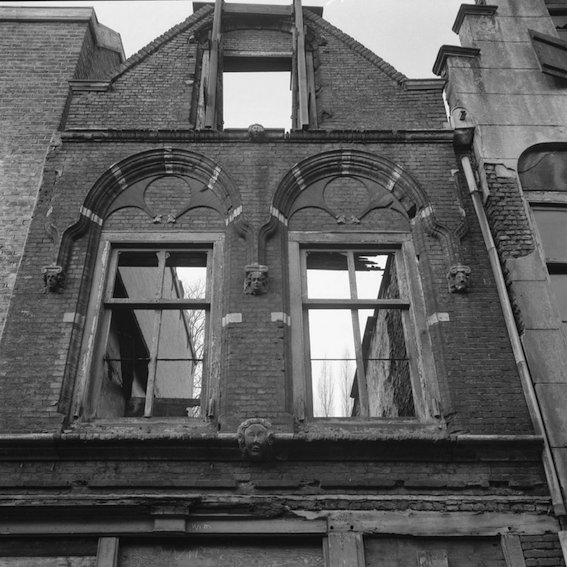
 When you live or work in a monument, then you know that you have to deal with special aspects. Emotions, for example. And rules. Adjusting matters to your user needs takes a lot of preparation. A monument determines the streetscape, you see, and how you and others feel at home in it. A monument is a part of our collective memory. That includes historical and more recent stories.
If you touch a monument, then you touch us! Should you therefore keep well away from it? No, because a monument only has value if it can be used according to your changing needs. So, you have a dilemma. How do you respectfully solve this dilemma?
It starts with a clear definition of what a monument actually is. My thoughts about that were triggered recently while watching the film Girl with a Pearl Earring. It takes place around 1666 when Vermeer is painting this famous picture. As a viewer you get a good impression of family life in the house of Vermeer. How Vermeer, his wife, their children, his mother and servants move about this house. A house that we would regard as a monument now but where you would not want to live in for all the gold in the world, because of the state it is in.
Life then
The main character, the maid Griet, hauls along numerous buckets of water from the pump outside, because there is no plumbing. In the morning she empties out the families’ chamber pots because they do not want to wander around a dark house at night trying to find the poop box outside. Electricity, sewerage and sanitary hygiene, they have never heard of. She drags logs around the house to keep the stoves burning in the kitchen and the fireplaces in the best rooms. And still, on cold days, everyone wraps themselves in warm shawls and cloaks because inside it does not get really comfortable. So what do we do with such buildings in the course of the centuries? We customize them on the basis of how we like to live and work.
Life now
No building that is hundreds of years old is still original. The part that has been modified least is the base building. The stakes under the building may have been replaced once, like rotten beams and rafters, but usually they are still in good shape. In the facade, the window frames and panes have been replaced more often, because for windowpanes they used the bottoms of bottles, not really useful for looking through. In walls and ceilings we have long been hiding pipes. Of doors and staircases many beautiful, original specimens have been preserved. The biggest changes you make in a monumental building, are on the inside.
You probably do not have a Griet sleeping in the corner of your basement between the stock of potatoes and onions. So you adjust the layout and design of the building to your current needs and wishes. Unlike people half a century ago, you do no longer desperately need a coal hole to get through the winter. But you do want a kitchen and bathroom to suit your taste and use. You need ICT facilities for your employees or your family members. You replace floor and wall coverings and furniture to your own needs. Of course you customize with respect for the original historic elements that bring the story of the building to life. A story you write your own chapter for as the current occupant. Of course within the requirements that the government imposes on behalf of all of us to live safely and responsibly.
Is a monument change?
So what is a monument? Everything that has to do with your use of the property, such as facilities for heating, cooling, ventilation, water, electricity and computers, is totally different from how the original building was designed and built. It is always about short-term investments in the fit-out for continuously changing needs. What has changed less or not at all is the base building and its facade. In the base building we recognize the original property and the function for which it was created. The part that requires a long-term investment. This most ancient part BRIQS sees as the centre of THE MONUMENT.
This division in base building and fit-out offers great benefits for monuments also. It ensures the possibility of constant use. Whether it is for living, working or leisure. Only then the property retains its value. For you, and also for the neighborhood in which you live, as for the future. In this way, each monument is a never-ending story. A story that you and each subsequent user can add a new personal chapter to.
What is the story of your monument when it comes to the content of the next chapter, lay out, function and applied technologies?
Take the next step and share your experiences
Do you want to take a next step? Come to the FREE* Masterclass. We will work with practical tools to instantly implement the actions of my ebook in your organizational, fiscal or financial projects and organization.
Join the conversation
Do you know how to build that new way and what you need? Do you succeed in connecting respectfully to the ancient structure of the building? Share it in the comments below.
To your health and wellbeing,
Remko Zuidema
[remko_author]
This post is also available in: Nederlands

